OT Cyber Security |
Understanding the Zero Trust Security Approach and Its Benefits
Home » Understanding the Zero Trust Security Approach and Its Benefits | OT Cyber SecurityUnderstanding the Zero Trust Security Approach and Its Benefits | OT Cyber Security
March 28, 2014 Posted by Faizal UpdatesImplementing a Zero Trust Security Approach: Benefits and Challenges
The Complexity of Modern Industrial Networks
Industrial environments today are characterized by complex networks with a multitude of interconnected systems and devices. This complexity increases vulnerability to cyberattacks and other security threats. These networks are typically heterogeneous, utilizing various technologies, protocols, and vendor tools. Additionally, the frequent connection and disconnection of devices and users make monitoring and control challenging.
Key Security Challenges in Industrial Organizations
- Complex and Evolving Threats: Cyber threats are becoming increasingly sophisticated and difficult to counter.
- Limited Visibility and Control: Diverse and dynamic networks make it hard to maintain comprehensive oversight.
- Lack of Standardization: Variability in technologies and protocols complicates security efforts.
- Constraints on Network Performance: Security measures must not impede network efficiency.
- Limited Resources: Many organizations struggle with insufficient security personnel and tools.
The Zero Trust Security Model
Zero Trust Security is an approach that assumes no entity, whether inside or outside the network, is automatically trustworthy. This model mandates verification of every user and device before granting network access and continuous monitoring to ensure only authorized entities access sensitive resources.
Benefits of Zero Trust Security
- Enhanced Security: By continuously verifying identities and monitoring activity, Zero Trust reduces the risk of unauthorized access.
- Improved Visibility: The approach offers better insight into network activity, helping to identify and mitigate threats promptly.
- Standardized Security Practices: Applying uniform security protocols across the network simplifies management.
- Optimized Performance: Effective implementation can balance security with network performance, avoiding bottlenecks.
- Resource Efficiency: Automation and centralized control can alleviate the burden on security teams.
Zero Trust Security Model
| Key Components | Description |
|---|---|
| Identity Verification | Ensures every user and device is authenticated before accessing the network. |
| Continuous Monitoring | Keeps track of network activities to detect and respond to anomalies. |
| Least Privilege Access | Grants users and devices the minimum access necessary for their roles. |
| Microsegmentation | Divides the network into smaller segments to limit the impact of potential breaches. |
| Multi-Factor Authentication (MFA) | Adds an extra layer of security by requiring multiple forms of verification. |
Guiding Principles of Zero Trust Security
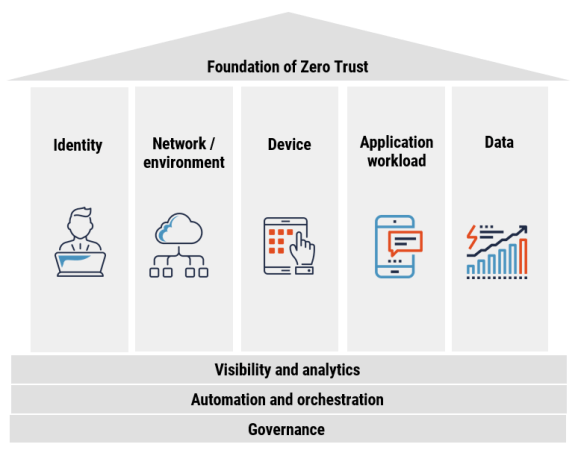
Never Trust, Always Verify
This fundamental principle of zero trust security dictates that all network traffic is treated as untrusted and must be authenticated and authorized before access is granted.
Authenticate and Authorize Users and Devices
Zero trust security mandates that both users and devices must be thoroughly authenticated and authorized prior to accessing any network resources.
Validate Network and Data Integrity
Beyond user and device authentication, zero trust security also necessitates verifying the network and data to ensure their safety and security.
Continuous Monitoring and Rapid Response
Zero trust security mandates ongoing surveillance of network traffic and the capability to swiftly address any potential threats or security incidents.
Advantages of Zero Trust Security in Industrial Environments




Would like to know more?
Contact us to know the best cyber security model that works for your industry.