Strengthening Security in SCADA/ICS Environments
Home » Strengthening Security in SCADA/ICS EnvironmentsStrengthening Security in SCADA/ICS Environments
March 31, 2014 Posted by Faizal UpdatesGrowing Threat Landscape
The frequency of cyber threats and attacks targeting industrial, manufacturing, and critical infrastructure organizations is rapidly increasing. These attacks often exploit vulnerabilities within SCADA (Supervisory Control and Data Acquisition) and ICS (Industrial Control System) environments, either through targeted actions by threat actors or untargeted ransomware campaigns. The primary motivation behind these attacks is typically the disruption of critical operations for financial gain.
Importance of Vulnerability Management
Vulnerability management in SCADA/ICS environments is a crucial cybersecurity process that helps mitigate the number of cyber threats and attacks. However, effectively identifying and rectifying vulnerabilities in these networks presents several challenges.
Defining Vulnerability Management in SCADA/ICS
Vulnerability management in SCADA/ICS involves identifying, prioritizing, correcting, and reporting software vulnerabilities and misconfigurations within Operational Technology (OT) or Industrial Control Systems.
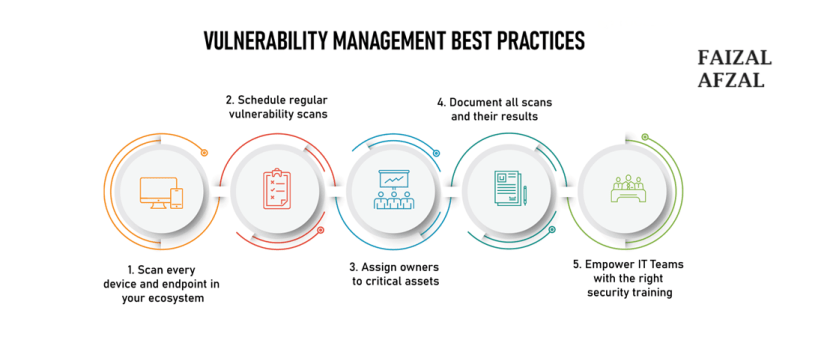
Key Components of an Effective Vulnerability Management Program
To establish a robust vulnerability management program for OT/SCADA/ICS systems, several critical components must be addressed:
- Asset Evaluation:
- Assess assets for known vulnerabilities and potential risks stemming from insecure design.
- Issue Prioritization:
- Prioritize vulnerabilities based on their likelihood of exploitation and potential impact.
- Mitigation Actions:
- Implement measures to address vulnerabilities and risks, such as:
- Applying software patches
- Managing configurations
- Employing other compensating controls as necessary
- Implement measures to address vulnerabilities and risks, such as:
By integrating these elements, organizations can develop a comprehensive vulnerability management program. This approach ensures the protection of SCADA/ICS systems, maintaining the integrity and availability of critical infrastructure.
Challenges and Considerations
Developing and executing an effective OT vulnerability management program is complex and often requires a manual approach involving multiple systems and stakeholders. Traditional IT vulnerability scanners are generally unsuitable for OT/SCADA/ICS networks due to the high sensitivity of devices in these environments. Specialized scanning solutions are necessary to address these unique challenges effectively.
By carefully coordinating efforts among various stakeholders and utilizing appropriate scanning technologies, organizations can enhance their cybersecurity posture, effectively managing vulnerabilities in SCADA/ICS environments.
Tackling SCADA/ICS Vulnerability Management: Challenges and Solutions
Challenge 1: Inadequate Asset Inventory Management
One significant challenge in managing SCADA/ICS vulnerabilities is the lack of a comprehensive asset inventory. Often, asset information is limited to outdated spreadsheets or fragmented data from various sources, leading to incomplete and unreliable coverage.
To address this, organizations need a robust asset inventory management solution that provides detailed profiles for each asset, including criticality, location, and accessibility. However, gathering this information can be challenging due to incomplete inventory data. While passive tools can compile basic data, they often lack the necessary detail for effective vulnerability management. Investing in advanced asset inventory management solutions and developing processes for maintaining detailed data is crucial for protecting SCADA/ICS systems from vulnerabilities and ensuring reliable infrastructure security.
Challenge 2: Identifying and Classifying Vulnerabilities
Although many vulnerability scanners are available, they pose stringent challenges in SCADA/ICS environments. These systems require a gentle approach to vulnerability scanning to avoid disrupting operations, and traditional scanners can quickly become outdated.
A more effective approach combines agent-based and agentless SCADA/ICS systems management. This method generates a complete inventory of assets, including firmware versions, patch status, and configuration settings, and cross-references it with vulnerability databases to provide a comprehensive view of the cyber risks in the OT/SCADA/ICS environment. This approach offers deep risk information, real-time coverage of all assets, and near real-time inventory updates, ensuring a complete and relevant view of vulnerabilities.
Challenge 3: Prioritizing Vulnerabilities
Identifying vulnerabilities is just the first step; determining which ones to remediate first is critical and challenging.
ESG Research found that 34% of cybersecurity professionals struggle with prioritizing vulnerabilities due to the sheer number that must be addressed. A comprehensive asset inventory helps prioritize the most critical or at-risk assets by considering factors such as asset criticality, network and application firewall protections, and insecure accounts. By scoring assets based on their risk context, organizations can prioritize remediation efforts and implement compensating controls effectively.
Challenge 4: Timely Remediation
Remediating vulnerabilities in IT environments is often straightforward with automated tools and dedicated teams, but it is more complex in SCADA/ICS environments. Patching, hardening settings, and deploying compensating controls can be tedious and time-consuming, especially with limited skills and resources. Challenges include tracking patches, device compatibility, operational requirements, resource availability, OEM push-back, and multiple upgrades for system integration.
A “Think Global: Act Local” approach is recommended, centralizing oversight and analysis of risks and vulnerabilities while enabling local operators to take remediation actions with automation. This includes using agent-based technology for efficient and safe remediation, not just detection.
Challenge 5: Continuous Tracking and Maintenance
Many ICS security leaders struggle to manage the vulnerability management process from start to finish due to its labor-intensive nature, leading to infrequent vulnerability assessments.
Once an assessment is completed, separate tools or internal resources are often needed to remediate identified vulnerabilities, making it easy to lose track of the overall process. Implementing a closed-loop vulnerability management process that incorporates integrated remediation is crucial. This can be enhanced by integrating administrative functions, such as marking patches as reviewed and approved, within the same toolset, significantly improving management. Real-time updates of asset inventories, vulnerabilities, and remediation information allow for instantaneously refreshing relevant data when querying an asset base.
Conclusion
Managing vulnerabilities in SCADA/ICS environments is challenging, but tools and processes can improve efficiency and effectiveness. Industrial organizations need to adopt technology that offers a 360-degree view of risk, centralized prioritization, and OT-safe remediation. People and processes are equally important, leveraging knowledge and expertise from both IT and OT domains. The convergence of IT and OT is crucial, requiring combined skills and knowledge to provide security tools and functions in an operational environment.
The “Think Global: Act Local” approach is effective, leveraging scale and knowledge at both ends of the process, with an agent-agentless platform enabling this. Focusing solely on vulnerability management is insufficient; adopting a comprehensive risk management approach provides fleet-wide visibility into risks and improves SCADA/ICS risk reduction.
How FAIZAL Can Help?
Protect your critical infrastructure and assets by implementing effective SCADA/ICS vulnerability management practices. To learn more, contact us.